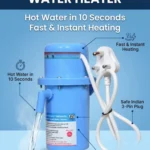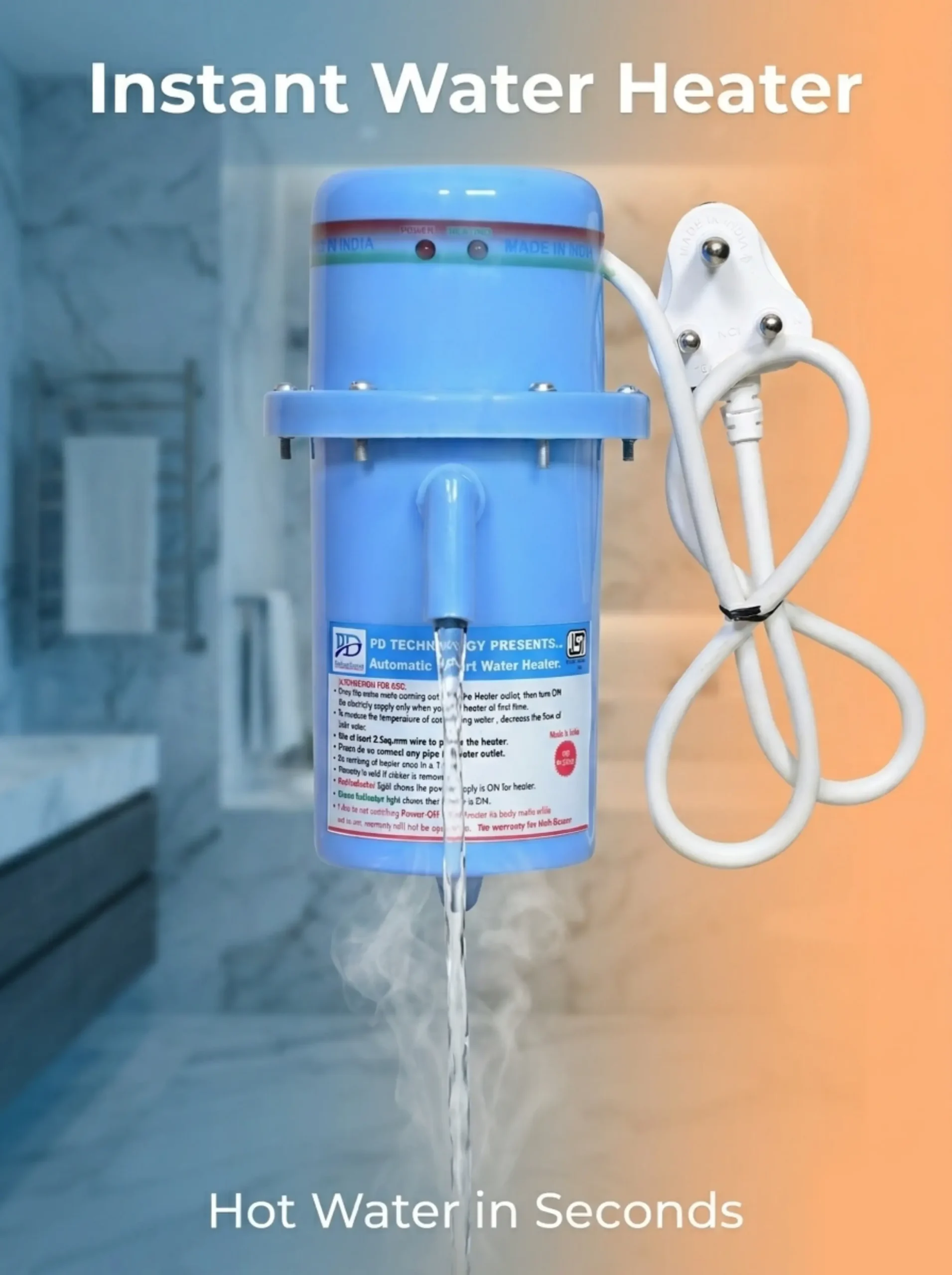




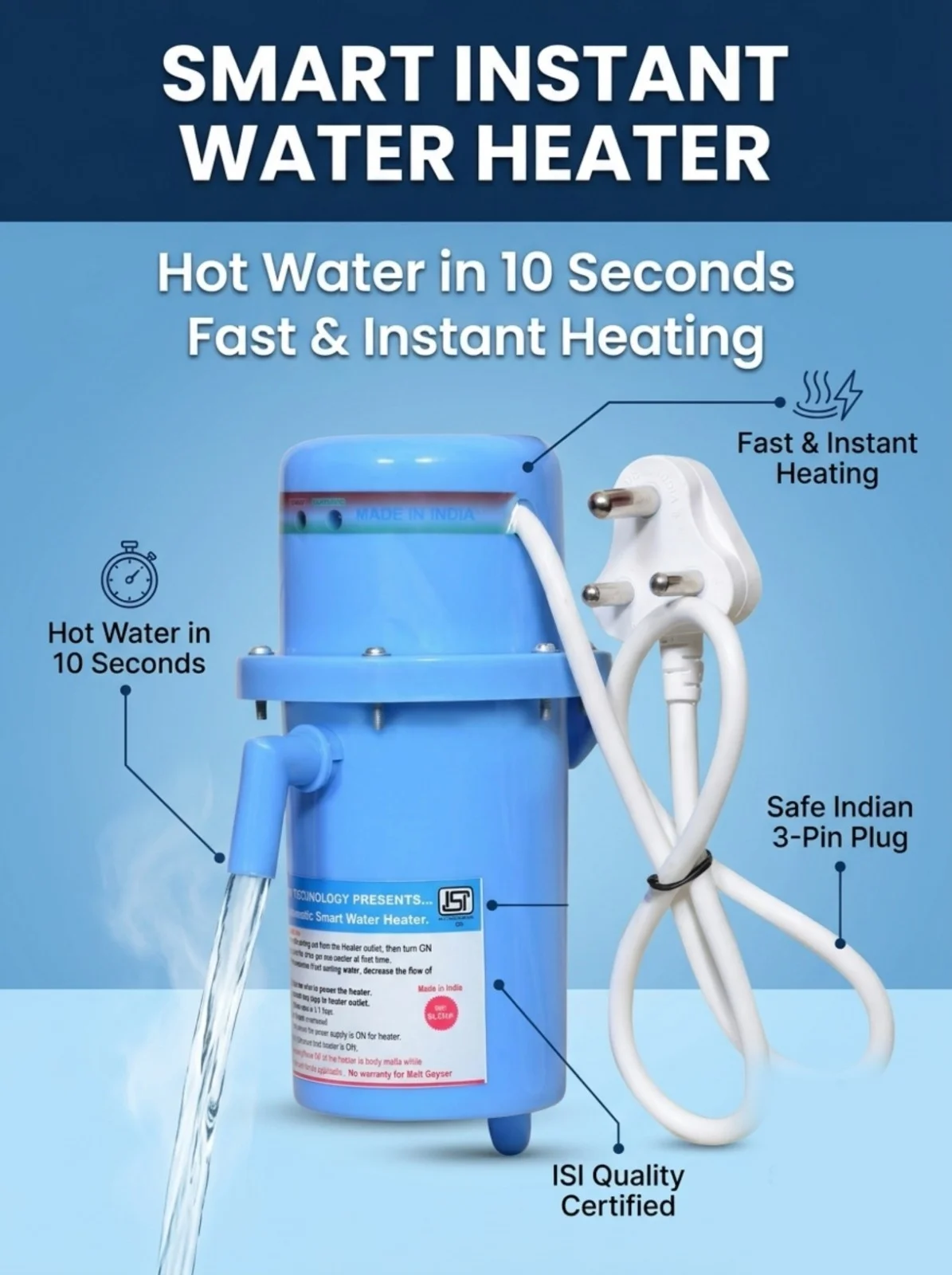
An instant water heater, also known as a tankless or on-demand water heater, is designed to heat water when it is needed rather than storing a large quantity of hot water in a tank. This compact design makes instant water heaters increasingly attractive for homes, apartments, offices, hotels, and other applications where space, convenience, and energy efficiency are important.
Unlike conventional storage water heaters, an instant water heater generally activates when water flows through the unit. A heating element or gas burner then heats the water as it passes through the system and delivers hot water through the outlet.
The growing interest in energy-efficient appliances, compact home equipment, and on-demand hot-water systems is supporting the expansion of the instant water heater industry.
What Is an Instant Water Heater?
An instant water heater is a water-heating appliance that produces hot water on demand. Instead of maintaining a tank full of heated water, the system activates when water flow is detected.
Electric models typically use an electric heating element, while gas-powered models use a burner to heat the water. The exact configuration varies by product, capacity, application, and regional requirements.
A typical instant water heater system may include components such as:
- Water inlet and outlet connections
- Heating element or gas burner
- Flow sensor
- Temperature controls
- Safety mechanisms
- Pressure-control components
- Electrical or gas connections
- Display or control interface in advanced models
The flow sensor is particularly important because it can trigger the heating process when water begins moving through the system.

How Does an Instant Water Heater Work?
The basic operating process is relatively straightforward.
1. Cold Water Enters the Unit
When a user opens the hot-water tap, cold water enters the heater through the inlet connection.
2. Flow Is Detected
A sensor detects water movement and activates the heating system.
3. Water Is Heated
The heating element or burner transfers heat to the flowing water.
4. Temperature Is Controlled
The system regulates heating to provide water at the selected or programmed temperature.
5. Hot Water Reaches the Outlet
The heated water then flows directly to the shower, faucet, kitchen outlet, or other point of use.
This on-demand operating model eliminates the need to continuously maintain a large volume of stored hot water.
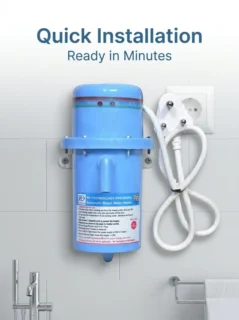
Instant Water Heater Installation
Correct installation is one of the most important factors affecting the safety, performance, and operating life of an instant water heater.
The reference video from PD Technology demonstrates the installation process for an instant water heater in Marathi. ([YouTube][1])
Watch the reference installation video on YouTube
While installation procedures differ between models, a typical installation involves the following stages.
Step 1: Select the Installation Location
Choose a suitable wall or mounting location with sufficient clearance and easy access to the water and electrical connections.
The location should also allow technicians to inspect and service the unit when required.
Step 2: Prepare the Water Connections
The water inlet and hot-water outlet should be connected according to the manufacturer’s specifications.
Incorrect connections can affect water flow and system performance.
Step 3: Mount the Heater Securely
The heater should be properly mounted using the recommended brackets, fasteners, and installation method.
A secure installation is particularly important because the unit must remain stable during repeated operation.
Step 4: Connect the Electrical Supply
For electric instant water heaters, electrical connections should be completed according to the manufacturer’s requirements and applicable electrical safety standards.
Because instant heaters can draw significant electrical power, the circuit, wiring, protection devices, and earthing should be appropriate for the specific model.
Electrical installation should be performed by a qualified professional.
Step 5: Check the Water Flow
Before normal operation, the plumbing connections should be checked for leaks and adequate water flow.
Step 6: Test the Unit
Once the installation is complete, the heater should be tested according to the manufacturer’s instructions.
Temperature control, water flow, heating operation, and safety functions should all be checked.
What are the Benefits of Instant Water Heaters?
1. Compact Design
One of the biggest advantages of an instant water heater is its relatively compact form factor. This makes it suitable for apartments, bathrooms, kitchens, offices, and other locations where installation space is limited.
2. Hot Water on Demand
Users do not necessarily need to wait for a storage tank to heat an entire volume of water. The heater operates as water is required.
3. Reduced Standby Heating
Storage water heaters maintain hot water for periods when it may not be used. Instant systems can reduce this type of standby heat loss because water is heated when required. ([Research and Markets][4])
4. Continuous Supply Potential
As long as the system has an appropriate water supply, power or fuel source, and sufficient heating capacity, it can provide hot water without depending on the limited volume of a storage tank.
5. Suitable for Modern Homes
Compact housing and urban living are increasing the importance of space-efficient appliances. The small footprint of many instant water heaters makes them attractive for modern residential environments.
6. Temperature Control
Many newer models provide improved temperature controls and safety features. Some advanced systems are also incorporating digital controls and connected technologies. ([Research and Markets][4])
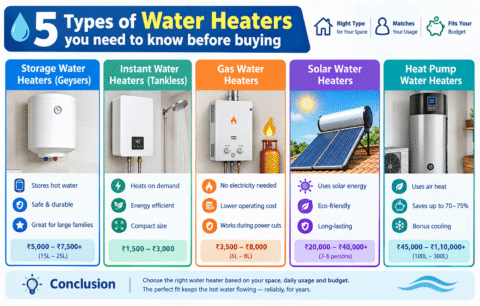
Comparison between Instant Water Heater vs. Storage Water Heater
| Feature | Instant Water Heater | Storage Water Heater |
|---|---|---|
| Heating method | Heats water on demand | Stores and heats water |
| Storage tank | Usually not required | Required |
| Space requirement | Generally compact | Generally larger |
| Hot water availability | On demand | Depends on stored volume |
| Standby heating | Generally lower | Present |
| Installation | Requires appropriate water and power/fuel connections | Requires tank, plumbing and power/fuel connections |
| Best suited for | Point-of-use and space-constrained applications | Higher-volume hot-water requirements |
The better option depends on household size, water demand, available electrical infrastructure, installation conditions, budget, and the intended application.
Electric vs. Gas Instant Water Heater
Instant water heaters can be broadly divided into electric and gas models.
Electric Instant Water Heater
Electric models use heating elements to heat water.
They are often attractive for point-of-use applications because of their compact design and relatively straightforward installation requirements.
However, electrical infrastructure must be suitable for the heater’s power requirements.
Gas Instant Water Heater
Gas models use a burner to heat water as it passes through the system.
They may be suitable for applications where gas infrastructure is available, but installation requires appropriate ventilation, fuel connections, exhaust arrangements, and safety measures.
The choice between electric and gas depends heavily on local infrastructure, energy prices, regulations, installation requirements, and consumer preferences.
Key Factors to Consider Before Buying an Instant Water Heater
Choosing an instant water heater should involve more than simply comparing prices.
Heating Capacity
Select a model according to the expected water flow and temperature requirements.
Power Rating
For electric models, check the required electrical load and ensure that the home’s electrical infrastructure can safely support it.
Water Pressure
Check the minimum and maximum water-pressure requirements specified by the manufacturer.
Safety Features
Look for appropriate safety mechanisms, temperature controls, protection systems, and certified installation requirements.
Energy Efficiency
Compare the operating efficiency of different models rather than considering only the initial purchase price.
Installation Requirements
Before purchasing, confirm whether additional plumbing, electrical, ventilation, or other installation work will be necessary.
Warranty and Service
Availability of service centers, replacement parts, warranty coverage, and qualified technicians can significantly affect the long-term ownership experience.
Major Trends Shaping the Instant Water Heater Industry
Energy Efficiency
Consumers and businesses are increasingly evaluating appliances based on energy consumption and operating costs. This is encouraging manufacturers to improve heating efficiency and system controls.
Smart Water Heating
Digital controls, connected devices, remote monitoring, and intelligent temperature management are emerging areas of product development. ([Research and Markets][4])
Compact Appliances
Smaller homes and apartments are creating demand for appliances that provide functionality without occupying significant floor space.
Improved Safety
Manufacturers continue to focus on temperature regulation, leak detection, electrical protection, and other safety-related features.
Electrification
In some markets, policy and energy-system changes are encouraging greater adoption of electric heating technologies. However, the suitability of electric systems depends on local grid capacity, installation conditions, electricity prices, and regulations.
Future Outlook for Instant Water Heaters
The future of instant water heating is likely to be influenced by three major factors: energy efficiency, digitalization, and changing residential infrastructure.
Manufacturers are expected to continue developing systems that provide more precise temperature control, improved safety, better energy management, and easier monitoring.
The market is also likely to become increasingly segmented according to application. Residential users may prioritize compactness, safety, convenience, and affordability, while commercial users may place greater emphasis on flow capacity, reliability, operating costs, and serviceability.
As consumers become more conscious of energy consumption, the ability to heat water only when required may remain an important selling point for instant water heating technologies.
Frequently Asked Questions
Is an instant water heater better than a storage water heater?
It depends on the application. Instant water heaters can be advantageous when compact size and on-demand hot water are priorities, while storage heaters may be preferable where larger quantities of hot water are required at once.
Does an instant water heater provide hot water immediately?
It heats water when flow is detected, but the actual time to receive hot water depends on the heater, water-flow rate, installation configuration, and distance between the heater and outlet.
Is an instant water heater energy efficient?
Instant systems can reduce standby heat loss because they generally heat water when it is needed. Actual energy consumption depends on the model, water temperature, usage pattern, incoming-water temperature, and energy source. ([Research and Markets][2])
Can an instant water heater be installed in a bathroom?
Many models are designed for bathroom or point-of-use applications, but installation must follow the manufacturer’s electrical, plumbing, clearance, and safety requirements.
How long does an instant water heater last?
Service life varies by product quality, water quality, usage, maintenance, installation, and operating conditions. Following the manufacturer’s maintenance recommendations can help support reliable operation.
What should I check before installing an instant water heater?
Check the required electrical capacity or fuel connection, water pressure, pipe connections, mounting requirements, safety features, ventilation requirements where applicable, and the manufacturer’s installation instructions.
Conclusion
Instant water heaters are becoming an important option for consumers looking for compact, convenient, and on-demand hot-water solutions. Their ability to heat water as it is required can reduce the need for large storage tanks and may help limit standby heat losses.
However, choosing the right system requires consideration of heating capacity, energy source, electrical infrastructure, water pressure, safety features, installation conditions, and long-term operating costs.
As manufacturers introduce smarter controls, improved safety systems, and more efficient heating technologies, instant water heaters are positioned to remain an important part of the evolving water-heating industry.