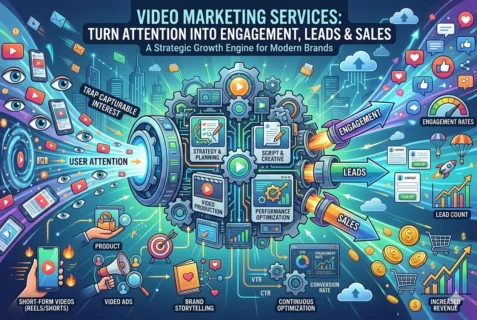









In today’s competitive digital landscape, content is not just about publishing blogs — it’s about creating a strategic asset that drives traffic, builds trust, and generates leads consistently.
Many businesses invest in content but fail to see results because they:
- Publish without a clear strategy
- Target the wrong keywords
- Ignore search intent
- Focus only on traffic, not conversions
The result? Low rankings, poor engagement, and minimal ROI.
This is where professional content marketing services come into play — helping you turn content into a scalable growth engine.
What Is Content Marketing?
Content marketing is the process of creating and distributing valuable, relevant, and consistent content to attract and engage your target audience.
It includes:
- Blog posts
- Website content
- Landing pages
- Case studies
- Guides and resources
The goal is simple: attract the right audience and convert them into customers.
Why Content Marketing Is Essential for Business Growth
Content marketing is one of the most powerful long-term strategies because it:
- Drives organic traffic from search engines
- Builds trust and credibility
- Positions your brand as an authority
- Generates consistent leads
- Reduces dependency on paid ads
Unlike paid campaigns, content continues to deliver results over time, making it a high ROI marketing channel.
Types of Content That Drive Results
Not all content performs equally. A successful strategy includes multiple content types.
1. SEO Blog Content
These are keyword-optimized blog posts designed to rank on Google and attract high-intent traffic.
Benefits:
- Long-term traffic generation
- Improved search rankings
- Increased visibility
2. Website & Landing Page Content
This includes service pages, product pages, and landing pages designed to convert visitors into leads.
Focus areas:
- Clear messaging
- Strong CTAs
- Conversion optimization
3. Lead Generation Content
Content designed to capture leads and nurture prospects.
Examples:
- Ebooks
- Whitepapers
- Checklists
4. Thought Leadership Content
Helps position your brand as an industry expert.
Examples:
- Industry insights
- Expert opinions
- Trend analysis
Understanding the Content Marketing Funnel
A strong content strategy aligns with the customer journey.
TOFU (Top of Funnel)
- Informational blogs
- Guides
- Awareness content
Goal: Attract traffic
MOFU (Middle of Funnel)
- Case studies
- Comparisons
- Educational content
Goal: Build trust
BOFU (Bottom of Funnel)
- Landing pages
- Product/service pages
- Sales copy
Goal: Convert visitors into customers
Our Content Marketing Process
Step 1: Audience & Market Research
We analyze your:
- Target audience
- Competitors
- Industry trends
Step 2: Keyword Research & Search Intent Analysis
We identify:
- High-volume keywords
- High-intent keywords
- Low-competition opportunities
Step 3: Content Strategy Development
We build a structured plan including:
- Topic clusters
- Content calendar
- Funnel mapping
Step 4: Content Creation & Optimization
We create content that is:
- SEO-optimized
- Engaging and readable
- Conversion-focused
Step 5: Publishing & Distribution
We ensure your content reaches the right audience through:
- Website publishing
- Social media sharing
- Email marketing
Step 6: Performance Tracking & Optimization
We continuously monitor:
- Rankings
- Traffic
- Engagement
- Conversions
And optimize content for better performance.
SEO Strategy Behind High-Performing Content
To rank on Google, content must follow a structured SEO approach.
1. Keyword Optimization
Using primary and secondary keywords naturally.
2. Search Intent Matching
Aligning content with what users are actually searching for.
3. Internal Linking
Connecting related pages to improve SEO and user experience.
4. Topic Clusters
Building authority around specific topics.
Tools Used in Content Marketing
Professional content marketing involves advanced tools such as:
- Google Analytics (for traffic insights)
- Google Search Console (for performance tracking)
- Keyword research tools
- Content optimization tools
Common Content Marketing Mistakes
Many businesses fail due to:
- Publishing without a strategy
- Ignoring SEO fundamentals
- Not targeting the right audience
- Inconsistent content creation
- Lack of performance tracking
Who Should Invest in Content Marketing?
- B2B companies
- Service providers
- E-commerce brands
- Startups
- SaaS companies
Any business looking for long-term growth and organic visibility should invest in content marketing.
Real Business Impact of Content Marketing
With the right strategy, content marketing can:
- Increase organic traffic significantly
- Generate consistent leads
- Improve brand authority
- Reduce customer acquisition cost
- Drive long-term business growth
Advanced Content Marketing Strategies
To outperform competitors, businesses should adopt:
1. Topic Cluster Model
Create pillar pages supported by related content.
2. Content Repurposing
Turn blogs into:
- Videos
- Social media posts
- Infographics
3. Content Distribution Strategy
Promote content across:
- Social media
- Email campaigns
- Outreach channels
4. Conversion Optimization
Ensure every piece of content includes:
- Clear CTAs
- Lead capture forms
- Value-driven messaging
Final Thoughts
Content marketing is not just about creating content — it’s about building a scalable system that drives traffic, leads, and revenue.
Businesses that invest in:
- Strategic planning
- SEO optimization
- Consistent execution
Are the ones that achieve sustainable growth.